AI infrastructure depends on memory bandwidth, capacity, latency, and power efficiency. As models grow and inference becomes more memory-intensive, the memory hierarchy increasingly determines XPU utilization and system performance.
Marvell helps hyperscalers, data center builders, and cloud providers design memory across the system, from custom SRAM and HBM near compute to CXL-based expansion, pooling, shared memory, and near-memory acceleration.
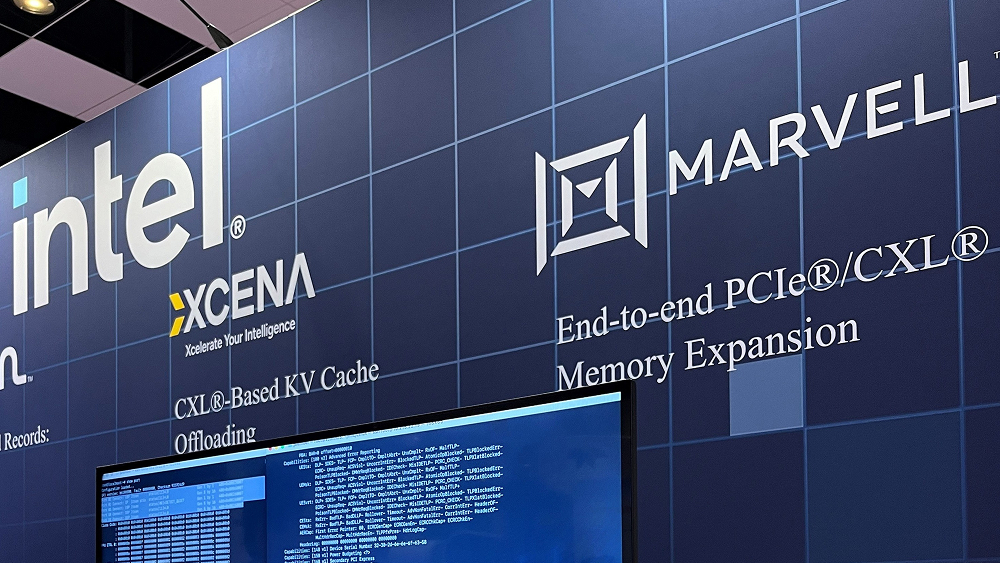
CXL provides a standards-based foundation for adding and sharing memory beyond the CPU or XPU. Marvell can shape the controller and surrounding subsystem around specific capacity, bandwidth, security, software, form-factor, and deployment requirements.

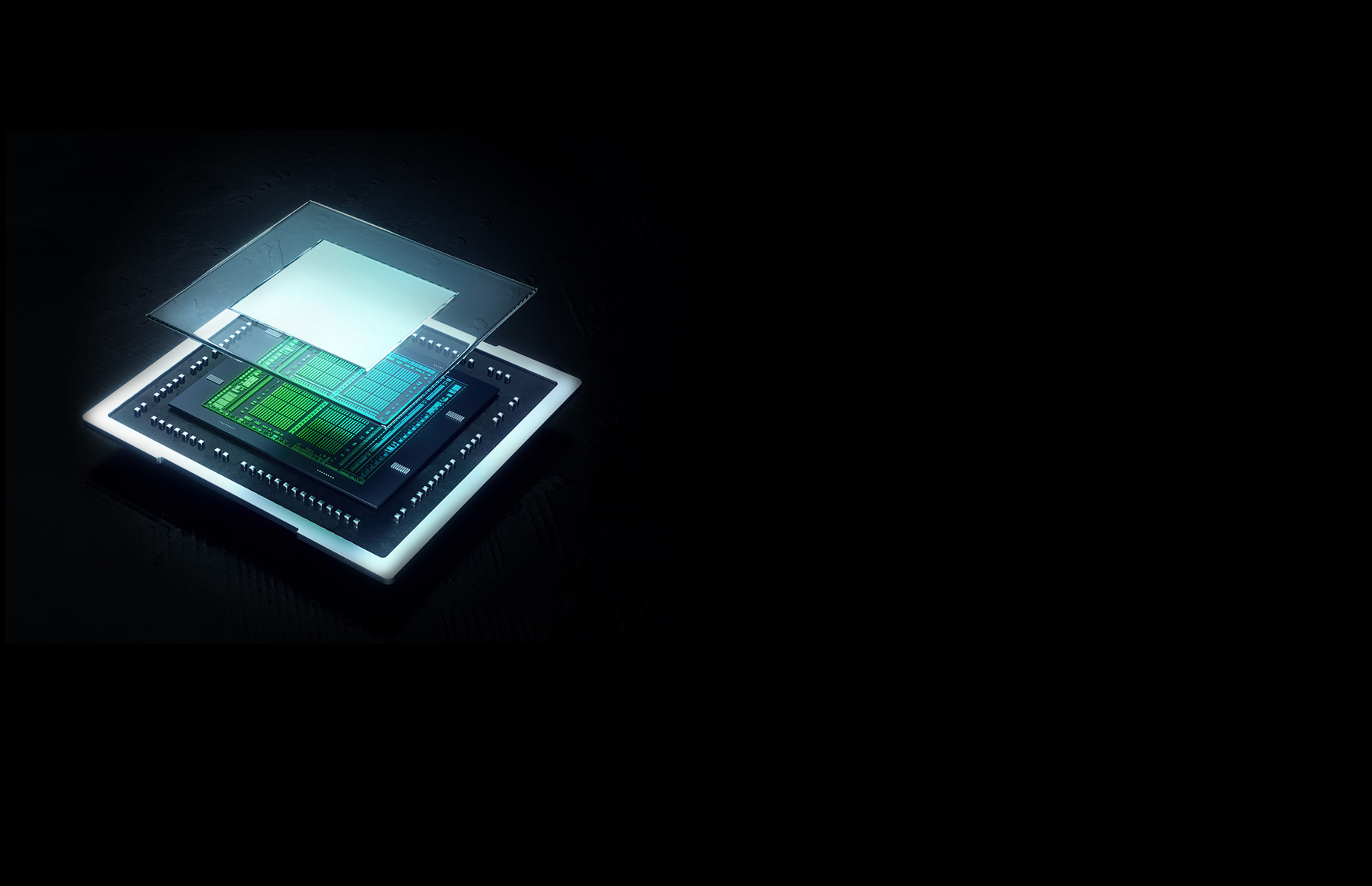
AI accelerators rely on on-chip memory for activations, buffers, queues, metadata, tables, and intermediate results. Memory architecture directly affects bandwidth, power, and die area.
Marvell custom SRAM can be optimized around the workload and floorplan, including width, depth, ports, timing, clocking, voltage behavior, aspect ratio, redundancy, and repair.
The result is more local bandwidth with lower memory overhead.
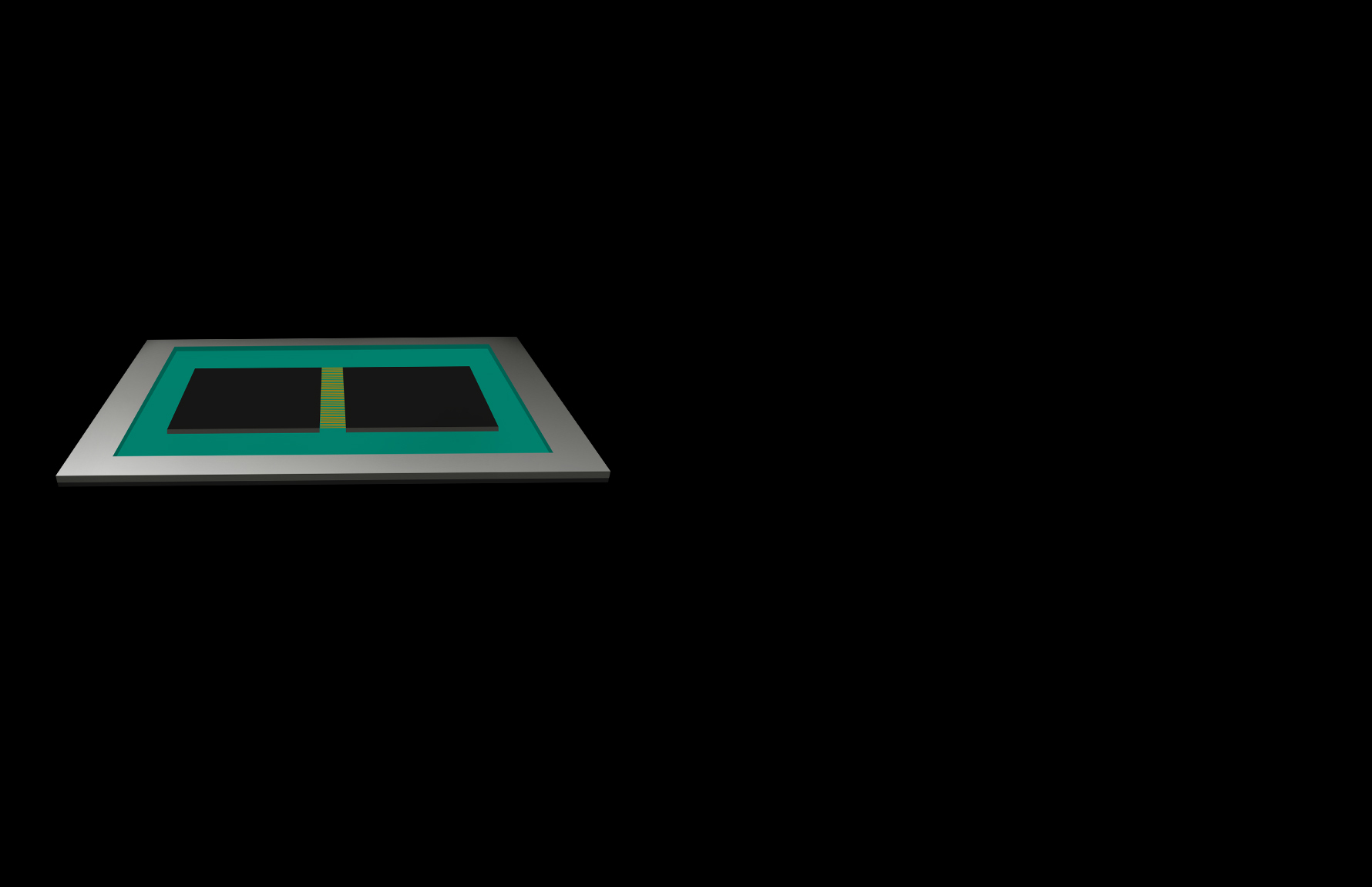
Scaling multi-die accelerators requires massive bandwidth between compute, memory, and I/O dies without exhausting power budgets or die-edge real estate. Marvell 2nm D2D IP delivers breakthrough efficiency.
By reducing the power and area required to move data between dies, Marvell die-to-die technology gives architects greater flexibility to partition accelerator functions across the package.
CXL allows memory capacity to extend beyond the DRAM directly attached to a CPU or XPU. It also enables new approaches to pooling, sharing, and disaggregation.
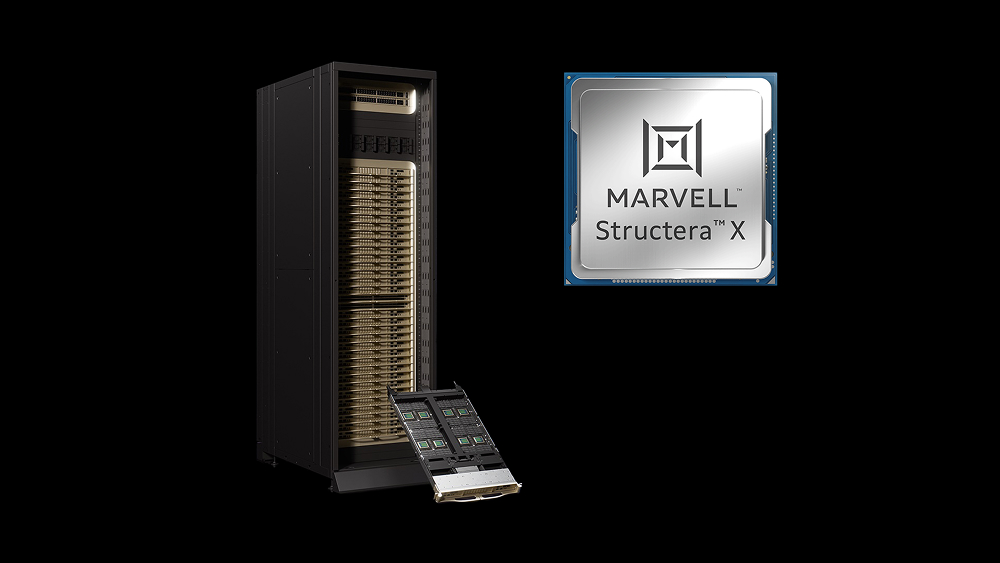
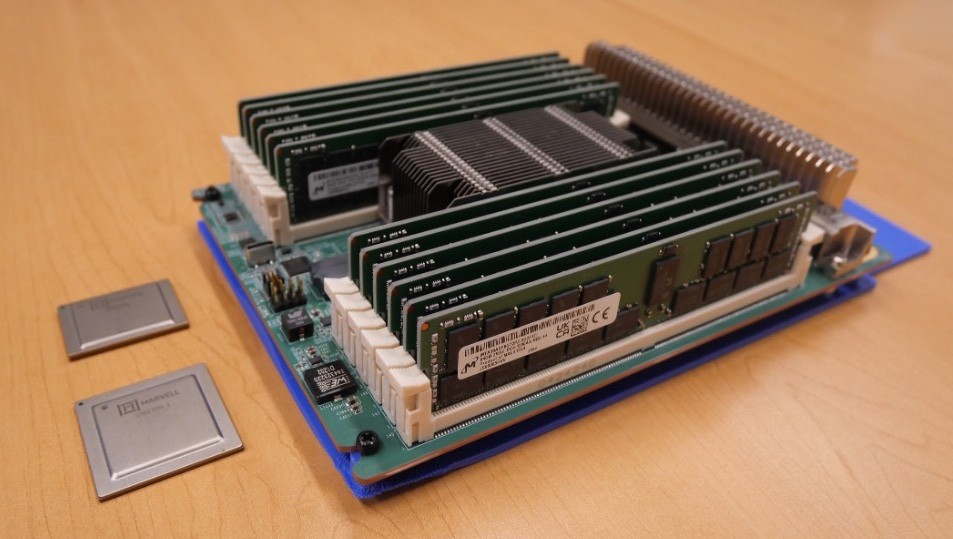
Marvell can develop custom CXL memory controllers and subsystems around the required topology, bandwidth, capacity, memory media, security, software, and deployment model. For standard deployment requirements, Marvell also offers the Structera family of CXL memory expansion, pooling, and acceleration products.
Moving large data sets between memory and processors consumes bandwidth and power. Memory acceleration places selected functions in the memory path so more work can be completed closer to the data.
Marvell can integrate:
These capabilities can increase effective capacity, reduce host processing, and lower traffic across the memory fabric.
Learn More
Learn More
Learn More

A custom memory solution changes part of the memory architecture around the requirements of a specific workload or system. Customization can occur in the embedded memory, HBM base die, memory interface, controller, protocol, form factor, compression, security, firmware, software, or system integration. It does not require every component in the memory subsystem to be proprietary.
A merchant product is usually the better choice when its interface, capacity, memory support, form factor, feature set, software model, and deployment schedule already meet the requirements.
Customization becomes more valuable when those constraints begin limiting performance, utilization, power, capacity, or system economics.
No. Structera is the Marvell merchant CXL product family for memory expansion, pooling, and near-memory acceleration. Custom Memory Products is the broader custom category. Structera can be a proof point, reference architecture, or starting point, but a custom memory engagement is shaped around the customer’s XPU, server, rack, software stack, workload, and roadmap.
No. Custom Memory can use standard interfaces such as CXL or PCIe. The customization may be in the controller behavior, feature set, media strategy, software hooks, security, telemetry, form factor, or system integration.
Custom SRAM increases local bandwidth on the die. Custom HBM with D2D improves package-level bandwidth and reduces interface overhead. Memory acceleration and near-memory compute help reduce unnecessary data movement.
Memory pooling allows capacity to be shared across multiple processors or accelerators, improving utilization and reducing stranded memory.
Photonic Fabric extends high-bandwidth memory connectivity beyond electrical reach, supporting shared and disaggregated memory architectures across racks.
Near-memory compute places processing closer to large memory resources to reduce data movement and host processing.
CXL-based memory expansion adds DDR capacity beyond local memory limits. Memory pooling makes capacity available across hosts and accelerators. Compression can increase effective memory capacity.
Custom HBM fits at the package level, close to the XPU. It helps increase memory capacity and improve interface efficiency while returning more XPU area and power to compute.
Custom SRAM fits on the die, closest to compute. It supports high-bandwidth local structures such as caches, buffers, scratchpads, queues, metadata, and workload-specific state.
Memory acceleration adds functions such as compression, encryption, data movement, command processing, and embedded compute into the memory path. The goal is to make memory more useful than passive capacity.
Early in architecture definition. Memory decisions affect XPU area, package layout, power, thermals, server design, software, supply chain, validation, and TCO.
The earlier Marvell engages, the more opportunity there is to shape the memory path around the workload.
We believe better partnerships help to build better technologies. Let’s connect and see what we can design together!
We will be in touch with you soon!