



By Rajagopal Krishnaswamy, Associate Vice President, Product Marketing, Marvell
The networking industry has fully embraced the benefits of open networking. Organizations building cloud infrastructure, AI clusters, enterprise data centers and edge networks want the flexibility to choose the hardware and software solutions that best meet their requirements. Software for Open Networking in the Cloud (SONiC) has emerged as a powerful foundation for achieving that flexibility, enabling customers to adopt an open, community-driven network operating system across diverse environments.
But deploying SONiC in production requires more than installing software on a switch.
As networks grow in scale and complexity, organizations need validated software, operational visibility, lifecycle management, automation, and enterprise-grade support. Running modern infrastructure successfully requires a complete operational framework that helps teams deploy, manage, troubleshoot and evolve their networks over time.
That reality is driving the next phase of SONiC adoption.
By Abed Mohammad Kamaluddin, Director, Custom Cloud Solutions, Marvell, and Vienna Alexander, Marketing Content Professional, Marvell
For most of the last decade, scaling AI meant scaling compute. If you built faster accelerators and wired enough of them together, the models would follow.
That is no longer the whole picture. Models now run to hundreds of billions of parameters with extensive context windows, and whether an expensive accelerator is working or just waiting comes down to memory: how much you have, how fast you can reach it, and how much time you lose moving data around.
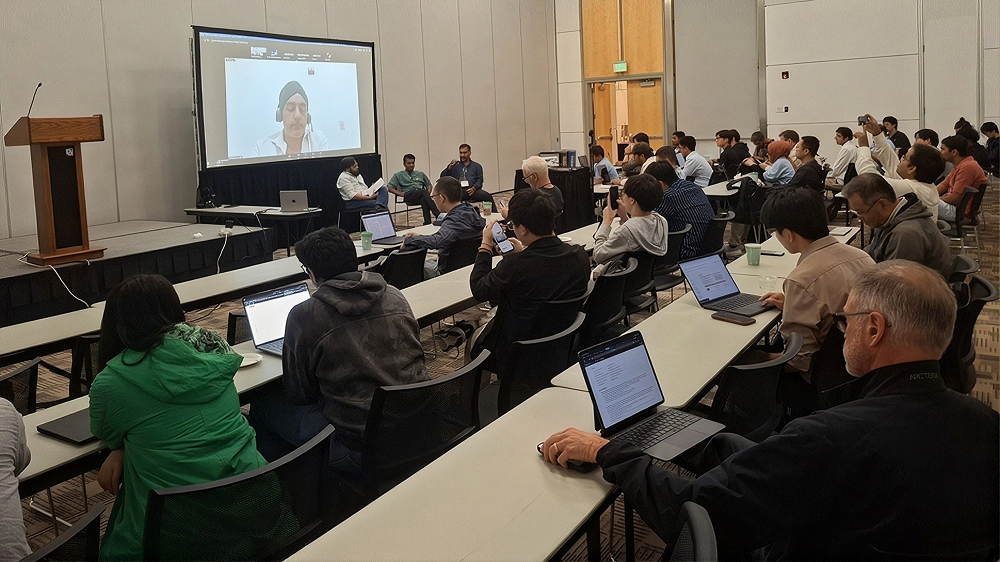
Once memory leaves the server and rides a switched fabric, is it still memory, or has it become a network? This was the central question of MemNetAI, the first workshop on Memory-Semantic Networking for AI-Scale Systems, launched by Marvell with researchers from IIT Hyderabad and IIIT Delhi. Held at ACM SIGCOMM 2026 in Denver and guided by a program committee spanning academia and industry, it brought speakers from Cornell, alongside industry experts and researchers presenting their work, to debate these questions on the bleeding edge of AI infrastructure.
By Rajagopal Krishnaswamy, Associate Vice President, Marvell
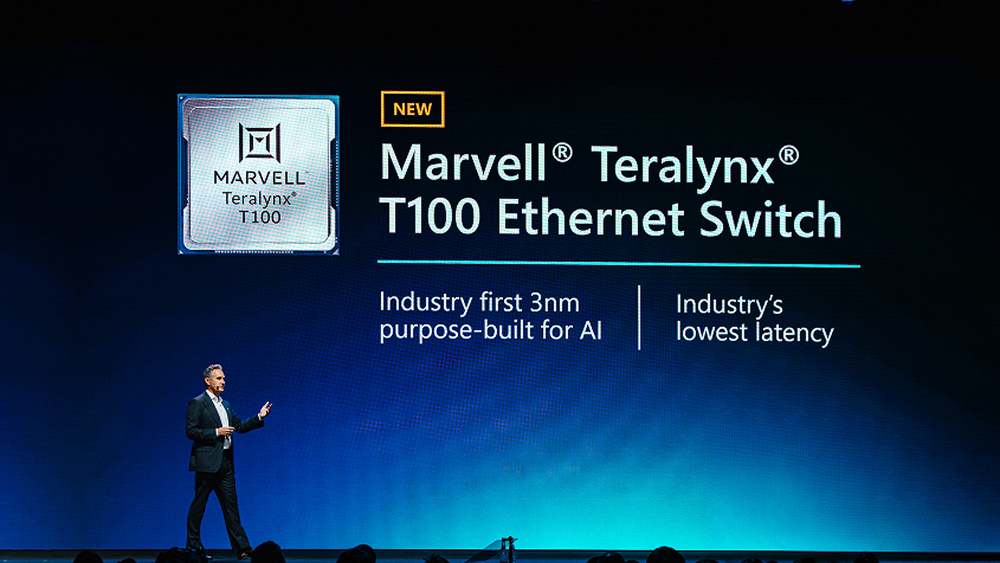
What do customers want from next-generation AI networks? Everything.
AI networks will need to manage exponentially more data across a rapidly expanding number of endpoints and evolving topologies, while reducing both cost and energy per bit. And, with data spending more than 30% of the time inside networks during training,1 congestion, transmission errors and other problems need to be kept to a minimum.
These networks will also need to be able to scale rapidly: AI networking spending is expected to reach $81.3 billion by 2030, more than 10x 2025 levels.2
By Vikram Dattatri, Senior Engineer, Cloud Platform Group, Marvell
Packet trimming doesn’t prevent traffic losses from occurring; instead, it streamlines the process for recovering them. It is also one of many technologies Marvell is developing to optimize networks for the AI era.
Artificial intelligence infrastructure is driving a fundamental shift in how data center networks are designed, validated, and deployed. As clusters scale to thousands—or even tens of thousands—of GPUs, the network is no longer just a connectivity layer. It becomes a tightly coupled component of the compute system, directly impacting job completion time, efficiency and overall cost.
To address these evolving requirements, Ethernet is undergoing a transformation. At OFC 2026, Marvell and Keysight Technologies demonstrated (see the video below) how next-generation Ethernet fabrics can meet the demands of AI workloads through a combination of advanced features and realistic validation. Leveraging Keysight’s KAI Data Center Builder and AresONE‑M 800GE platform, the collaboration showcased how the Marvell® Teralynx® switch fabric supports emerging Ultra Ethernet Consortium (UEC) capabilities, with a particular focus on packet trimming, Auto Load Balancing (ALB) and Ultra Ethernet Transport (UET).
By Claudia Hoessbacher, Senior Director, and Wolfgang Heni, Director, Optical Engineering, Marvell
Plasmons have been used to accelerate drug discovery, enhance the sensitivity of sensors and even create artistic treasures in the Roman era.
Ongoing research at Marvell seeks to harness them to improve the performance of optical networks for the AI era. Plasmonics, a technology that leverages the properties of surface plasmon polaritons (SPPs), provides a promising pathway for enhancing the roadmap of silicon photonic (SiPho) light engines, a critical component inside optical modules.
Plasmonic-based SiPho light engines could support modules operating at 3.2T and beyond while consuming a fraction of the space and power per bit of modules based on existing technologies. Manufacturers could leverage foundry process technologies for scaling production.